
TL;DR: Python interviews test whether you can predict language behavior, choose appropriate data structures, write readable code, test edge cases, and explain tradeoffs. Practice short conceptual answers alongside runnable problems; do not memorize trivia without understanding when it matters.
Python Interview Questions: 24 Questions With Practical Answers
Practice Python interview questions covering data models, functions, iterators, concurrency, testing, performance, and clear coding-interview reasoning.
What do Python interviews usually test?

Python interviews often combine language fundamentals, problem solving, debugging, and production judgment. A role focused on web services may emphasize typing, testing, async I/O, packaging, and database boundaries; a data role may spend more time on iteration, memory, vectorized work, and data quality. Read the job description before deciding what to study.
Interviewers usually care about reasoning as much as syntax. Clarify inputs, name assumptions, choose a simple approach, test it, and then discuss complexity or a more scalable alternative. If you do not remember an API exactly, describe the behavior you need and verify the detail rather than bluffing.
Which Python fundamentals should you explain clearly?
Be ready to explain mutability, identity versus equality, scope, argument passing, iterables versus iterators, generators, comprehensions, exceptions, context managers, decorators, and class composition. Connect each definition to a practical consequence. For example, a mutable default argument persists across calls because the default object is created when the function is defined.
Also understand common collection costs. Dictionary and set lookup are typically treated as average constant time, while list membership is linear. State that worst cases and implementation details exist instead of turning these expectations into absolute guarantees.
Which 24 Python interview questions should you practice?
- What is the difference between is and ==?
- Which built-in Python types are mutable?
- Why are mutable default arguments risky?
- How do *args and **kwargs work?
- What is LEGB scope resolution?
- What makes an object iterable?
- What is the difference between an iterable and an iterator?
- When would you use a generator?
- How does a context manager work?
- What does a decorator do?
- When is a dataclass useful?
- How do shallow and deep copies differ?
- How are exceptions chained and handled?
- What is the purpose of type hints?
- How would you test a function with external dependencies?
- What is the Global Interpreter Lock in CPython?
- When would you choose threads, processes, or asyncio?
- How do you profile slow Python code?
- What makes a function pure and why can that help?
- How do dictionaries handle hashable keys?
- How would you remove duplicates while preserving order?
- How do you process a file too large for memory?
- How do you structure a small Python package?
- How do you review code for readability and failure modes?
How should you answer Python behavior questions?
Predict the result before describing the rule. Walk through object creation, name binding, mutation, and control flow in order. If the question depends on a Python version or a CPython implementation detail, say so. This shows precision without pretending every behavior is universal.
| Question type | Strong response | Common mistake |
|---|---|---|
| Output prediction | Trace bindings and mutations line by line | Guess from visual similarity |
| Data structure choice | Compare access, order, duplicates, and memory | Choose only by habit |
| Concurrency | Separate CPU-bound and I/O-bound work | Say threads always make code faster |
| Testing | Cover behavior, boundaries, and failures | Test only the happy path |
| Optimization | Measure first, then change the bottleneck | Rewrite before profiling |
How do you approach a Python coding problem?
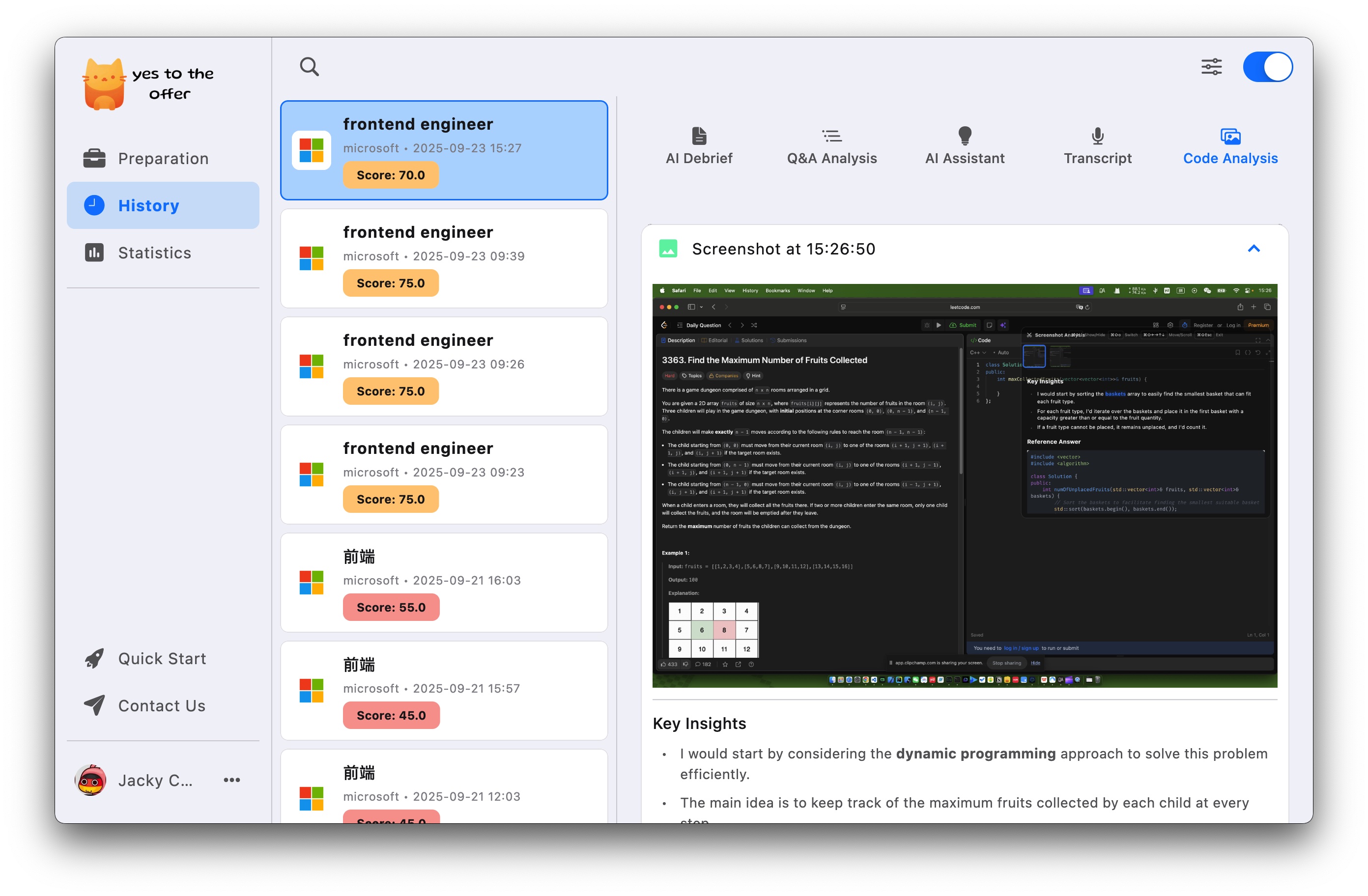
Restate the problem and clarify constraints. Work through a small example, name a straightforward solution, and estimate its time and space cost. Implement readable code with meaningful names, then test empty input, one element, duplicates, boundary values, and any invalid input the contract allows.
Use Python features when they improve clarity, but avoid compressing the solution into a clever one-liner that hides reasoning. Explain why a dictionary, set, heap, deque, or generator fits the access pattern. If time remains, discuss how the solution changes for streaming data or larger inputs.
How should you prepare for production-focused Python questions?
Review the tools and boundaries named in the role. Practice explaining dependency isolation, configuration, logging, exception handling, tests, typing, package layout, and observability without claiming one architecture fits every project. Know how you would prevent secrets from entering source control and how you would make failures diagnosable.
For framework-specific questions, separate Python behavior from framework conventions. Use official documentation when exact version behavior matters. A strong answer can say what you have used, what you have not used, and how you would verify an unfamiliar detail.
How can AI help with Python interview preparation?
AI can generate variations of a problem, challenge complexity claims, propose edge cases, and compare two implementations. Coding support can help you inspect an unfamiliar error or articulate a tradeoff, while transcript review can show whether your explanation matched your code.
Do not outsource understanding. Run code, inspect results, and explain each choice in your own words. Follow assessment rules and do not use assistance in a proctored environment that prohibits it. YesToTheOffer supports coding practice, permitted real-time reasoning support, private context, and review.
Frequently asked questions
FAQ
What Python topics are most important for interviews?
Prioritize data types, mutability, scope, functions, iteration, generators, exceptions, context managers, object design, testing, and complexity. Add concurrency, async I/O, packaging, or a framework according to the job description rather than studying every topic equally.
How do I prepare for a Python coding interview?
Practice explaining a simple solution before optimizing it. For each problem, clarify constraints, choose a data structure, write readable code, test edge cases, and state time and space complexity. Review mistakes and solve variations instead of memorizing final code.
Should I memorize Python syntax for an interview?
Know common syntax well enough to communicate clearly, but prioritize behavior and reasoning. If you forget a minor API detail, state the operation you need and how you would verify it. Confidently inventing syntax is worse than acknowledging a small gap.
What is the difference between `is` and `==` in Python?
`==` asks whether values compare equal, while `is` asks whether two references point to the same object. Use `is` for identity checks such as `value is None`; do not use it as a general replacement for value equality.
Can AI help me practice Python interview questions?
Yes. AI can generate follow-ups, review explanations, suggest tests, and compare complexity. Verify generated code by running it, keep the reasoning yours, and follow the employer's rules about tools during any live or proctored assessment.
Turn practice into a repeatable system
Build an evidence-based practice plan, use responsible support where permitted, and review the conversation while it is fresh.
Turn practice into a repeatable system
Prepare with your own evidence and review every answer with clearer context.