
TL;DR: Organize your preparation around components, templates, services, dependency injection, RxJS, routing, forms, testing, performance, and architectural tradeoffs. A good technical answer defines the concept, gives a small example, names a failure mode, and explains when another approach would be better.
Angular Interview Questions: 25 Questions and Answers
Prepare Angular interview questions covering components, dependency injection, RxJS, change detection, testing, performance, and architecture.
Try YesToTheOfferWhat should you know first?
Organize your preparation around components, templates, services, dependency injection, RxJS, routing, forms, testing, performance, and architectural tradeoffs. A good technical answer defines the concept, gives a small example, names a failure mode, and explains when another approach would be better.
Confirm the interview format and criteria first. Build a small evidence bank from your resume, the job description, projects, decisions, mistakes, and measurable outcomes. Practice aloud and refine weak transitions.
For a repeatable workflow, combine the AI interview copilot guide, resume-grounded answer preparation, and interview review process.
Which questions should you practice?
- What is Angular, and how is it different from AngularJS?
- How does dependency injection work in Angular?
- When would you use an Observable instead of a Promise?
- How does Angular change detection work?
- How would you improve a slow Angular application?
Do not memorize scripts, invent metrics, or answer every question with the same story. State assumptions, ask clarifying questions when needed, and explain what you would verify when you do not know.
For each question, identify the underlying competency before choosing an example. A factual opening keeps the answer easy to follow; context and tradeoffs then show depth. Practice one likely follow-up for every answer so you can explain ownership, constraints, alternatives, and lessons without drifting into a memorized speech.
How should you structure a strong answer?
Start with a direct conclusion, then add relevant evidence, your reasoning, and one lesson. Use real projects and honest details so follow-up questions strengthen rather than expose your answer.
Organize your preparation around components, templates, services, dependency injection, RxJS, routing, forms, testing, performance, and architectural tradeoffs. A good technical answer defines the concept, gives a small example, names a failure mode, and explains when another approach would be better.
Use a simple sequence: answer the question, add the minimum context needed, explain the action or reasoning, state the result, and close with what the example proves for this role. Technical prompts also benefit from explicit assumptions, edge cases, and a quick validation plan.
What does a focused preparation plan look like?
| Answer part | Show | Avoid |
|---|---|---|
| Opening | Direct conclusion and scope | A long autobiography |
| Evidence | A concrete decision or example | Unsupported claims |
| Reasoning | Assumptions and tradeoffs | Jumping to an answer |
| Review | One specific improvement | Generic self-criticism |
- Confirm the format and evaluation criteria
- Map six to eight real examples to likely competencies
- Practice concise openings and follow-up questions
- Review assumptions, tradeoffs, and weak evidence
- Prepare thoughtful questions and a calm close
Confirm the interview format and criteria first. Build a small evidence bank from your resume, the job description, projects, decisions, mistakes, and measurable outcomes. Practice aloud and refine weak transitions.
How can AI support responsible interview practice?
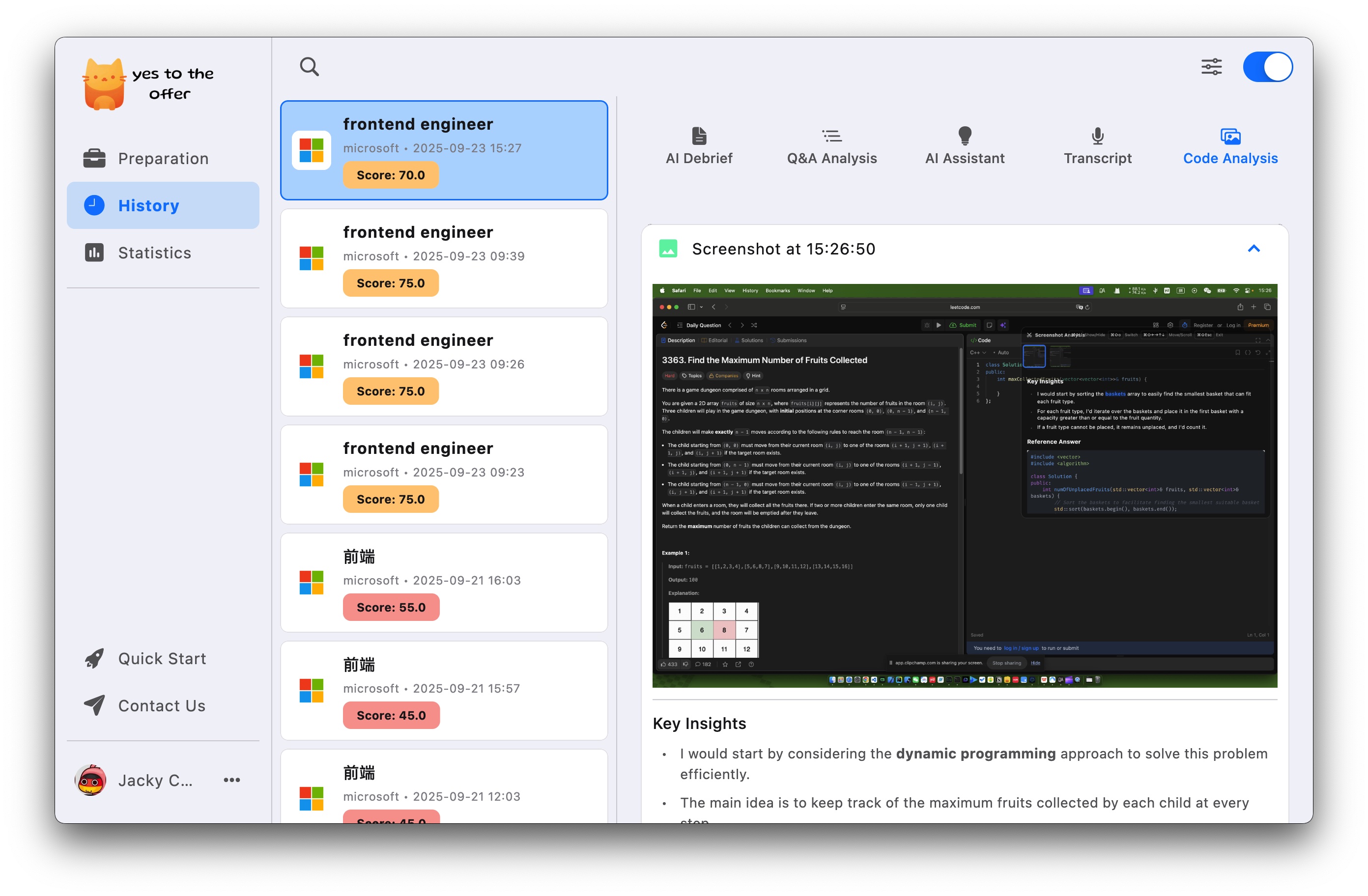
AI is most useful when it organizes material you already understand. YesToTheOffer can ground preparation and real-time structure in your resume, role description, and private context, assist with coding, and preserve a transcript for review. Always follow the employer's interview rules.
Do not memorize scripts, invent metrics, or answer every question with the same story. State assumptions, ask clarifying questions when needed, and explain what you would verify when you do not know.
Frequently asked questions
FAQ
What is Angular, and how is it different from AngularJS?
Organize your preparation around components, templates, services, dependency injection, RxJS, routing, forms, testing, performance, and architectural tradeoffs. A good technical answer defines the concept, gives a small example, names a failure mode, and explains when another approach would be better.
How does dependency injection work in Angular?
Confirm the interview format and criteria first. Build a small evidence bank from your resume, the job description, projects, decisions, mistakes, and measurable outcomes. Practice aloud and refine weak transitions.
When would you use an Observable instead of a Promise?
Start with a direct conclusion, then add relevant evidence, your reasoning, and one lesson. Use real projects and honest details so follow-up questions strengthen rather than expose your answer.
How does Angular change detection work?
Do not memorize scripts, invent metrics, or answer every question with the same story. State assumptions, ask clarifying questions when needed, and explain what you would verify when you do not know.
How would you improve a slow Angular application?
AI is most useful when it organizes material you already understand. YesToTheOffer can ground preparation and real-time structure in your resume, role description, and private context, assist with coding, and preserve a transcript for review. Always follow the employer's interview rules.
Practice with evidence from your own experience
Start with a direct conclusion, then add relevant evidence, your reasoning, and one lesson. Use real projects and honest details so follow-up questions strengthen rather than expose your answer.
For a repeatable workflow, combine the AI interview copilot guide, resume-grounded answer preparation, and interview review process.
Practice with evidence from your own experience
Prepare Angular interview questions covering components, dependency injection, RxJS, change detection, testing, performance, and architecture.
Try YesToTheOffer