
TL;DR: Walmart interviews vary by role and location, but strong answers consistently show customer focus, dependable execution, teamwork, safety awareness, and calm judgment. Prepare short, truthful examples and verify the exact process with your recruiter.
Walmart Interview Questions: Answers and Preparation Guide
Prepare for Walmart interview questions on customer service, teamwork, reliability, safety, priorities, and practical workplace scenarios.
What should you know first?
Walmart interviews vary by role and location, but strong answers consistently show customer focus, dependable execution, teamwork, safety awareness, and calm judgment. Prepare short, truthful examples and verify the exact process with your recruiter.
Use this guide as a framework, not a script. Confirm the current format with the recruiter, prepare evidence from work you actually did, and state assumptions clearly. Do not invent experience or metrics.
- How should you structure a strong answer?
- Which questions should you prepare?
- How can AI support responsible preparation?
Which questions should you prepare?
- Why do you want to work at Walmart?
- Tell me about a time you helped a difficult customer.
- How do you prioritize when several tasks are urgent?
- Describe a disagreement with a coworker.
- What would you do if you noticed an unsafe condition?
Why do you want to work at Walmart?
Connect your motivation to the role: serving customers, learning operations, working reliably with a team, and growing useful skills. Avoid generic praise; mention what you can contribute.
Lead with a concise conclusion. Add only the context needed to understand the problem, explain your action or reasoning, then close with the result, tradeoff, or lesson. Practice one follow-up about constraints and alternatives.
Tell me about a time you helped a difficult customer.
Use a real service example. Explain how you listened, clarified the need, stayed within policy, offered a workable next step, and confirmed the customer understood the outcome.
Lead with a concise conclusion. Add only the context needed to understand the problem, explain your action or reasoning, then close with the result, tradeoff, or lesson. Practice one follow-up about constraints and alternatives.
How do you prioritize when several tasks are urgent?
State the criteria you use: safety first, immediate customer impact, deadlines, and coordination with a supervisor. Communicate conflicts early instead of silently dropping work.
Lead with a concise conclusion. Add only the context needed to understand the problem, explain your action or reasoning, then close with the result, tradeoff, or lesson. Practice one follow-up about constraints and alternatives.
Describe a disagreement with a coworker.
Describe the shared goal, the specific disagreement, how you listened and used facts, and the resolution. Do not attack the other person or pretend conflict never happens.
Lead with a concise conclusion. Add only the context needed to understand the problem, explain your action or reasoning, then close with the result, tradeoff, or lesson. Practice one follow-up about constraints and alternatives.
What would you do if you noticed an unsafe condition?
Protect people first, secure or mark the area when appropriate, and notify the responsible manager through the approved process. Do not improvise beyond your training.
Lead with a concise conclusion. Add only the context needed to understand the problem, explain your action or reasoning, then close with the result, tradeoff, or lesson. Practice one follow-up about constraints and alternatives.
How should you structure a strong answer?
| Preparation area | Do this | Avoid |
|---|---|---|
| Evidence | Use a real decision, action, and result | Generic claims |
| Reasoning | Explain assumptions and tradeoffs | Jumping to an answer |
| Delivery | Start with a concise conclusion | A memorized monologue |
What does a focused practice plan look like?
Day 1: map the role and format. Day 2: draft five evidence-based examples. Day 3: practice concise openings. Day 4: add technical or situational follow-ups. Day 5: record a timed mock. Day 6: repair weak evidence. Day 7: review lightly and prepare questions.
Use this guide as a framework, not a script. Confirm the current format with the recruiter, prepare evidence from work you actually did, and state assumptions clearly. Do not invent experience or metrics.
Which mistakes should you avoid?
Avoid memorized monologues, vague claims, invented numbers, and answers that skip the question. Do not present a tool's suggestion as expertise you do not have. Keep your own judgment in control.
Connect your motivation to the role: serving customers, learning operations, working reliably with a team, and growing useful skills. Avoid generic praise; mention what you can contribute.
Use a real service example. Explain how you listened, clarified the need, stayed within policy, offered a workable next step, and confirmed the customer understood the outcome.
How can AI support responsible preparation?
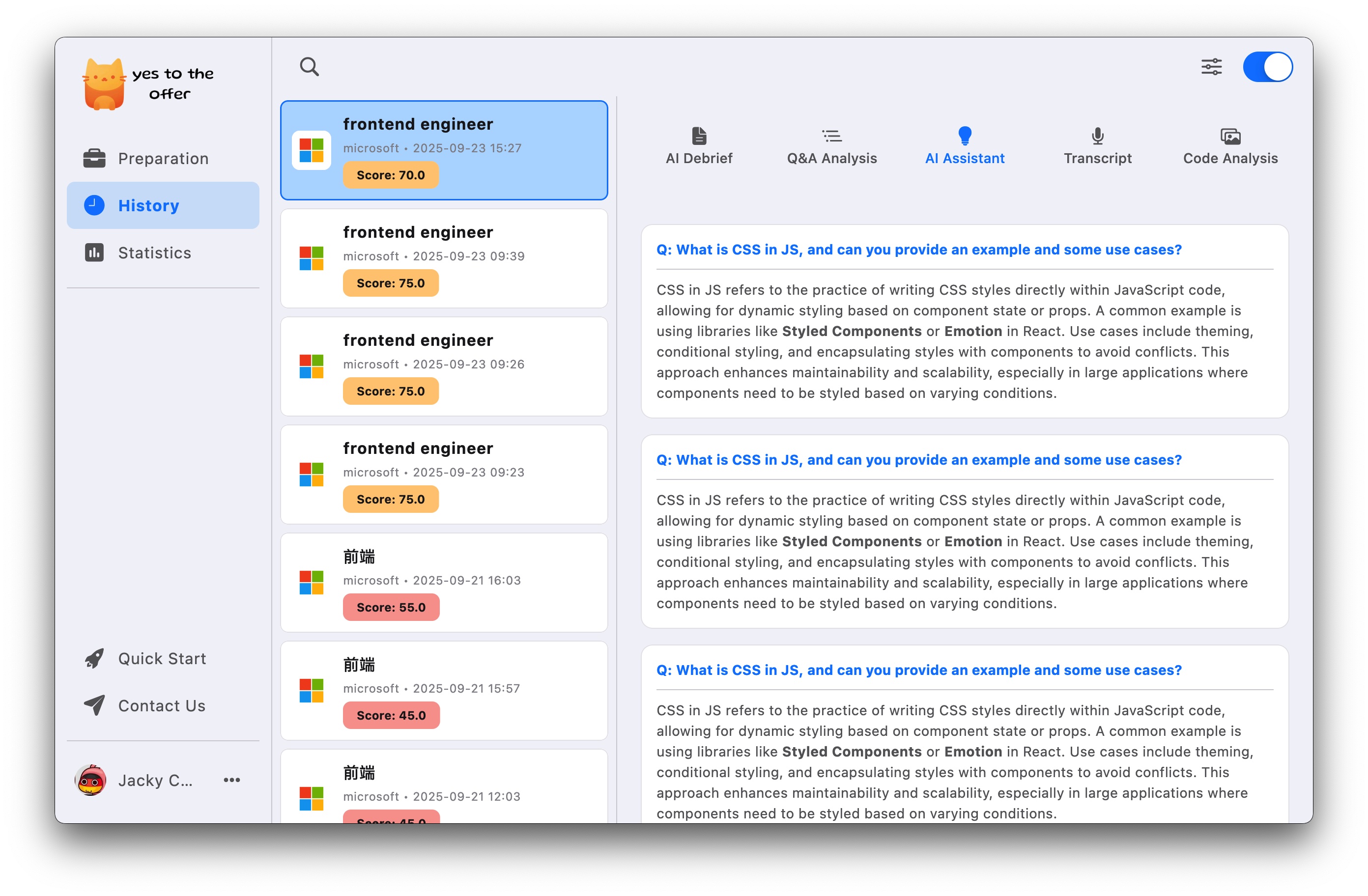
AI is most useful when it organizes material you already understand. YesToTheOffer can ground preparation and real-time structure in your resume, job description, and private context, assist with coding, and preserve a transcript for review. Always follow the employer's interview and assessment rules.
Lead with a concise conclusion. Add only the context needed to understand the problem, explain your action or reasoning, then close with the result, tradeoff, or lesson. Practice one follow-up about constraints and alternatives.
Frequently asked questions
FAQ
Why do you want to work at Walmart?
Connect your motivation to the role: serving customers, learning operations, working reliably with a team, and growing useful skills. Avoid generic praise; mention what you can contribute.
Tell me about a time you helped a difficult customer.
Use a real service example. Explain how you listened, clarified the need, stayed within policy, offered a workable next step, and confirmed the customer understood the outcome.
How do you prioritize when several tasks are urgent?
State the criteria you use: safety first, immediate customer impact, deadlines, and coordination with a supervisor. Communicate conflicts early instead of silently dropping work.
Describe a disagreement with a coworker.
Describe the shared goal, the specific disagreement, how you listened and used facts, and the resolution. Do not attack the other person or pretend conflict never happens.
What would you do if you noticed an unsafe condition?
Protect people first, secure or mark the area when appropriate, and notify the responsible manager through the approved process. Do not improvise beyond your training.
Turn preparation into clear evidence
Walmart interviews vary by role and location, but strong answers consistently show customer focus, dependable execution, teamwork, safety awareness, and calm judgment. Prepare short, truthful examples and verify the exact process with your recruiter.
Use this guide as a framework, not a script. Confirm the current format with the recruiter, prepare evidence from work you actually did, and state assumptions clearly. Do not invent experience or metrics.
Turn preparation into clear evidence
Prepare for Walmart interview questions on customer service, teamwork, reliability, safety, priorities, and practical workplace scenarios.