
TL;DR: A cybersecurity analyst interview tests evidence-based investigation, prioritization, incident handling, security fundamentals, and communication—not a list of tool names. Practice explaining what you would check, why it matters, what you would contain, and when you would escalate.
Cybersecurity Analyst Interview: 25 Questions and Answers
Prepare for a cybersecurity analyst job interview with questions on triage, logs, incidents, risk, communication, and practical answer frameworks.
What does a cybersecurity analyst interview test?

Analyst roles sit between noisy technical signals and business decisions. Interviewers want to know whether you can distinguish an observation from a conclusion, preserve evidence, reduce harm, communicate uncertainty, and follow a documented response process. The depth varies between SOC, vulnerability, cloud, governance, and product-security roles, so map preparation to the job description.
Start with the job description and mark the skills that appear more than once. Build a small evidence bank from your real work, study, or volunteer experience. Practice a direct answer, then a follow-up that explains your decision, tradeoff, and result. Record a mock session and review where your answer became vague or too long.
Which 25 cybersecurity interview questions should you practice?
- How do threat, vulnerability, likelihood, and impact differ?
- How would you triage a suspicious login alert?
- What logs would you inspect after a phishing report?
- How do you distinguish a false positive from benign activity?
- What are confidentiality, integrity, and availability?
- How do authentication and authorization differ?
- What is least privilege?
- How would you contain a compromised endpoint?
- When should an incident be escalated?
- How do hashing and encryption differ?
- What is the purpose of network segmentation?
- How would you investigate unexpected outbound traffic?
- What makes a useful detection rule?
- How do you prioritize vulnerabilities?
- What evidence should an incident timeline contain?
- How would you explain risk to a nontechnical leader?
- What is defense in depth?
- How do you handle an unknown file safely?
- What does a secure change process include?
- How would you improve a noisy alert?
- What is your approach to threat intelligence?
- How do you protect credentials and secrets?
- Describe a security mistake and what you learned.
- How do you stay current without chasing every headline?
- What would you ask about the team’s incident process?
How should you answer an investigation scenario?
Use a transparent sequence: confirm the alert source and time window; identify affected users, assets, and business criticality; collect relevant logs without destroying evidence; form and test hypotheses; contain according to authority; escalate with a clear severity and confidence level; document decisions; and plan recovery plus lessons learned. State assumptions when the prompt lacks data.
| Focus | What to demonstrate | Weak approach |
|---|---|---|
| Alert triage | Scope, evidence, confidence, impact, and next action | Calling every alert an incident |
| Incident response | Containment within authority and preserved evidence | Deleting artifacts before collection |
| Risk communication | Plain language, uncertainty, and business consequence | Reciting acronyms |
| Technical depth | Fundamentals connected to observable behavior | Listing tools without explaining decisions |
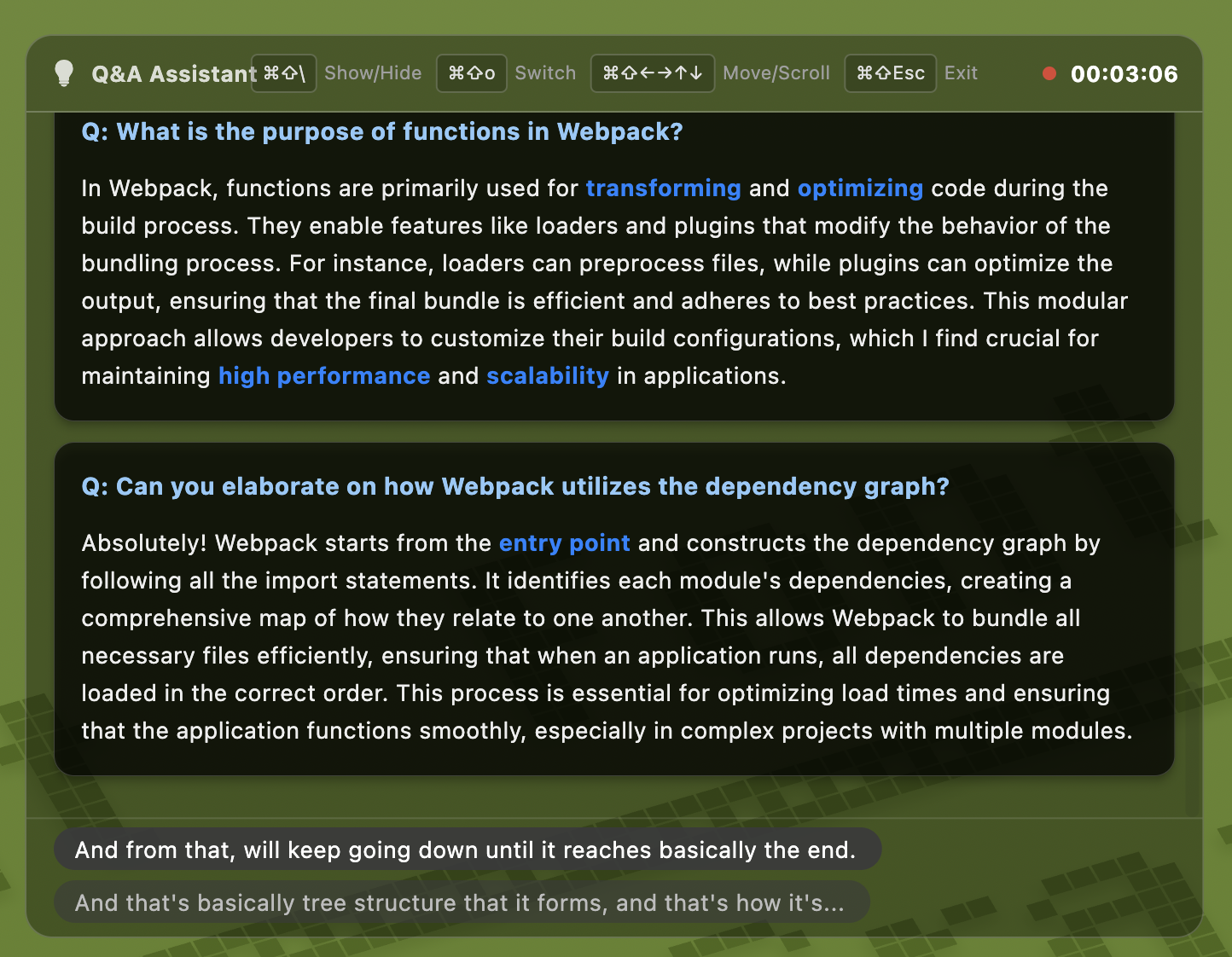
A practical preparation workflow
Build three defensible case studies from labs, coursework, or work: one alert investigation, one hardening or vulnerability decision, and one communication example. Remove sensitive indicators and describe the environment honestly. For each story, prepare the initial signal, evidence sources, hypothesis, action, result, and what you would improve.
Start with the job description and mark the skills that appear more than once. Build a small evidence bank from your real work, study, or volunteer experience. Practice a direct answer, then a follow-up that explains your decision, tradeoff, and result. Record a mock session and review where your answer became vague or too long.
How should you use interview support responsibly?
Check the employer’s and interview platform’s rules before using any tool in a live assessment. In restricted or proctored sessions, rely on preparation only. When assistance is allowed, keep the final answer in your own words, verify technical suggestions, protect confidential information, and remain ready to explain every claim.
How does YesToTheOffer fit this workflow?
YesToTheOffer can ground preparation in your resume, job description, company notes, and private context. Its desktop workflow supports real-time transcription, answer structuring, coding assistance, and post-interview review. Use those features to organize your own evidence and reasoning, not to invent experience. Learn more through these guides: AI interview copilot, specialized interview support, resume-grounded answer workflow.
Frequently asked questions
FAQ
What should I study for a cybersecurity analyst interview?
Prioritize networking, operating-system and identity fundamentals, common attack paths, logs, alert triage, incident response, vulnerability prioritization, and risk communication. Then add the cloud or tooling named in the job description.
Are cybersecurity interviews mostly technical?
Many combine technical scenarios with behavioral questions. Analysts must investigate carefully, work with others, document decisions, and explain risk, so communication and judgment matter alongside technical knowledge.
How do I answer a security scenario when information is missing?
State your assumptions, ask what telemetry and authority are available, describe the safest first checks, and explain how new evidence would change priority or containment.
Can I use home-lab projects as interview examples?
Yes. Explain the goal, environment, data, detection or control, result, and limitations. Do not present a guided lab as independent production experience.
Can AI help with cybersecurity interview preparation?
AI can generate scenarios and challenge a hypothesis, but outputs can be wrong or unsafe. Validate technical details in a lab or trusted documentation, protect sensitive data, and follow assessment rules.
Turn preparation into a repeatable system
Start with the job description and mark the skills that appear more than once. Build a small evidence bank from your real work, study, or volunteer experience. Practice a direct answer, then a follow-up that explains your decision, tradeoff, and result. Record a mock session and review where your answer became vague or too long.
Turn preparation into a repeatable system
Prepare for a cybersecurity analyst job interview with questions on triage, logs, incidents, risk, communication, and practical answer frameworks.