
A real-time interview assistant is useful for one simple reason: interviews move faster than notes.
In a live online interview, you are listening, thinking, choosing an example, answering clearly, and watching for follow-up questions at the same time. If the round is technical, you may also be reading a coding prompt or explaining tradeoffs while the interviewer changes the requirement.
The best use of a real-time assistant is not to outsource the interview. It is to keep the conversation legible.
Use real-time support without losing the thread
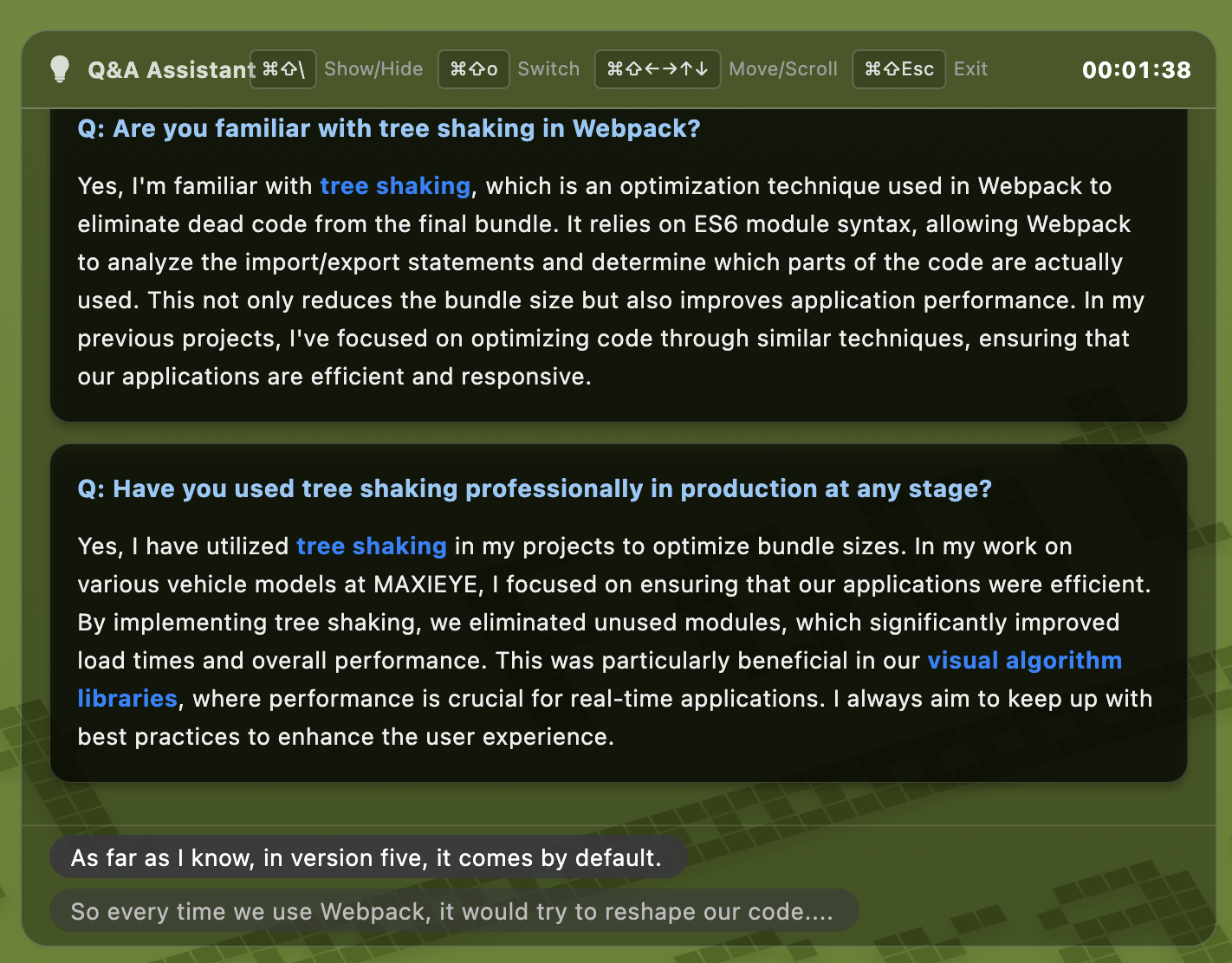
YesToTheOffer helps candidates capture interviewer questions, connect them to resume and job context, and review the conversation after the call.
What a real-time interview assistant actually does
A real-time interview assistant sits around the live interview workflow. It should help with practical tasks that candidates already try to do manually:
- Turning interviewer questions into text.
- Separating the main question from follow-up details.
- Keeping resume, job description, and company context nearby.
- Suggesting answer structure, not a memorized script.
- Helping with coding prompt interpretation and tradeoffs.
- Saving the interview record for review.
That is different from a question bank. A question bank assumes you know what will be asked. Real interviews usually do not work that way.
Where candidates lose time during online interviews
Most candidates do not fail because they know nothing. They fail because the interview creates friction:
- The question is long and has several parts.
- The interviewer asks a follow-up before the candidate has finished organizing the first answer.
- A behavioral question needs a specific example, not a generic strength.
- A coding prompt has hidden constraints.
- The candidate remembers the right project after the call is over.
That last point matters. Many strong candidates have good experience but weak retrieval under pressure. A real-time assistant helps if it makes retrieval easier without making the answer sound canned.
A practical workflow
Before the interview, prepare the context:
- Add your resume.
- Add the job description.
- Add short notes on the company and team.
- Add project stories, incidents, metrics, and decisions you can discuss.
- Add coding topics or system design notes for technical rounds.
During the interview, use the assistant for orientation:
- Read the transcribed question before answering.
- Identify whether the interviewer is asking for a story, a decision, a tradeoff, or a solution.
- Pull one relevant example from your own background.
- Answer with a clear structure.
- Keep the focus on the interviewer, not the tool.
After the interview, review the record:
- Save the questions that were asked.
- Mark answers that felt vague or too long.
- Improve your examples for the next round.
- Add new company-specific notes to your private knowledge base.
Real-time support vs prep-only tools
| Feature | YesToTheOffer | Prep-only tools |
|---|---|---|
| Question context | Captures the live question and keeps it available while you answer. | Usually starts from prepared prompts or practice questions. |
| Personal context | Uses resume, job description, company notes, and private examples. | Often gives generic answer advice unless you manually paste context. |
| Coding rounds | Supports prompt understanding, approach planning, and code analysis. | Often focuses on practice problems before the interview. |
| Review loop | Keeps interview history so you can improve after the call. | May not record what actually happened in the interview. |
For more background on the broader category, read the AI interview copilot guide. If your main concern is the record after the call, the interview transcription and review guide is the better starting point.
How YesToTheOffer fits
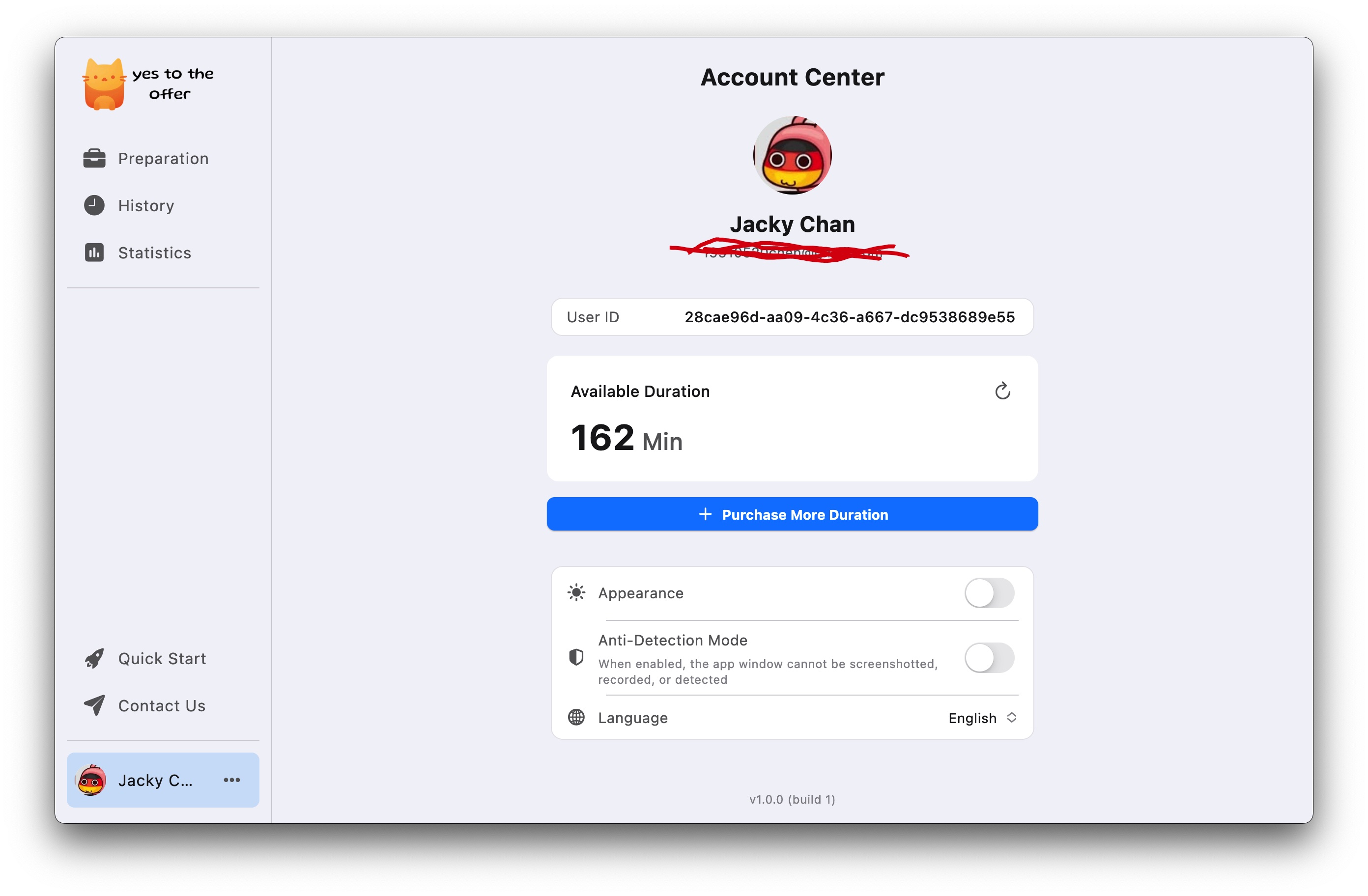
YesToTheOffer is built as a desktop interview copilot for online interviews. The workflow centers on live transcription, answer guidance, coding support, screenshot analysis, resume and job context, private knowledge, and review history.
That matters because most interview friction is not isolated to one feature. A behavioral answer may need a resume detail. A coding question may need a screenshot or shared prompt. A system design answer may need a structured tradeoff. A strong assistant should keep those pieces in one place.
Responsible use
Use a real-time interview assistant within the rules of the interview, company, and platform. It should help you prepare, understand, organize, and review. It should not be a substitute for knowing your own experience or practicing the skills the role requires.
FAQ
What is a real-time interview assistant?
A real-time interview assistant helps candidates follow live online interviews by capturing questions, organizing context, and supporting structured answer preparation and review.
Is it different from a mock interview tool?
Yes. Mock interview tools are mainly for practice before the interview. A real-time assistant is built around the live call and the review work after it.
Can it help with coding interviews?
Yes, if the assistant supports coding context. It can help parse prompts, compare approaches, and review code, but it should not replace technical preparation.
Should candidates use it for every interview?
No. Candidates should use it where it fits the interview format and follow the rules set by the company, recruiter, and interview platform.
Prepare your context before the next online interview
Use YesToTheOffer to organize your resume, job description, examples, coding notes, and post-interview review workflow.